
Antarctica Cruise for Seniors: What You Really Need to Know Before You Book
A practical, independent look at age policies, physical demands, medical clearance, and the best operators for travelers 60 and older planning an Antarctica expedition cruise.
Key Takeaways
- Age is rarely a barrier - medical fitness matters more than your date of birth.
- Most operators have no fixed upper age limit; travelers into their 80s and 90s complete Antarctica expeditions regularly.
- The Fly the Drake option eliminates the Drake Passage crossing entirely, removing the primary seasickness risk for older travelers.
- Ship choice determines overall comfort more than any other single factor.
- Travel insurance with emergency medical evacuation cover is non-negotiable - not optional.
Is There an Antarctica Cruise Age Limit? Understanding What Really Matters
Here is the reassuring part first: most operators do not set a fixed upper age limit for an Antarctica cruise for seniors. Instead of a cutoff birthday, cruise lines rely on health questionnaires and mobility self-assessments completed before departure. A hard upper age limit is not standard practice across the industry (Swoop Antarctica). Aurora Expeditions has carried travelers as old as 92 (Aurora Expeditions), and Intrepid Travel does not publish a specific upper age limit for its Antarctica departures (Intrepid Travel). The evaluation is about fitness, not birthdate.
- Expedition operators (Poseidon, Aurora, Quark) - health questionnaire + mobility self-assessment; no fixed upper age limit
- Luxury operators (Silversea, Ponant) - similar health screening; some require physician sign-off for guests 75+
- Mainstream operators (Holland America, Viking) - standard health declaration; vary by itinerary
Antarctica Cruise for Elderly Travelers: What Cruise Lines Actually Check
Rather than checking a birth year, operators check what actually predicts a safe trip: a completed health questionnaire and a mobility declaration (ZoomDoc). Aurora Expeditions asks travelers to disclose existing medical conditions and mobility limitations before booking is confirmed (Aurora Expeditions). For some sailings, a subset of operators requires a physician's signature confirming fitness to travel (APT Antarctica). None of this hinges on age alone.
Antarctica Cruise Physical Requirements: How Fit Do Senior Travelers Actually Need to Be?
Physical fitness, not age, is what actually gates an antarctica cruise for seniors. The demands are specific and worth naming plainly: boarding a Zodiac from a moving platform, walking on wet, snowy, or rocky terrain during shore landings, and standing in cold, windy conditions for extended periods (Aurora Expeditions; Antarctica Guide; Chimu Adventures). None of this requires athletic fitness. It requires steady balance, the ability to layer clothing correctly, and realistic self-awareness about your own limits before you land in a place with no hospital nearby.
- Stair test: Can you climb and descend two flights of stairs without stopping to rest? Ship gangways and companionways require this minimum.
- Standing balance test: Can you stand unsupported on a moving surface for 30 seconds? Zodiac boarding requires this while the boat moves in swell.
- Cold tolerance test: Can you stand outdoors in winter clothing for 90 minutes? Shore landings involve extended time in Antarctic conditions.
These three self-assessment criteria are editorial guidance drawn from operator health questionnaires, not a standardized medical protocol. Discuss any doubts with your physician before booking.
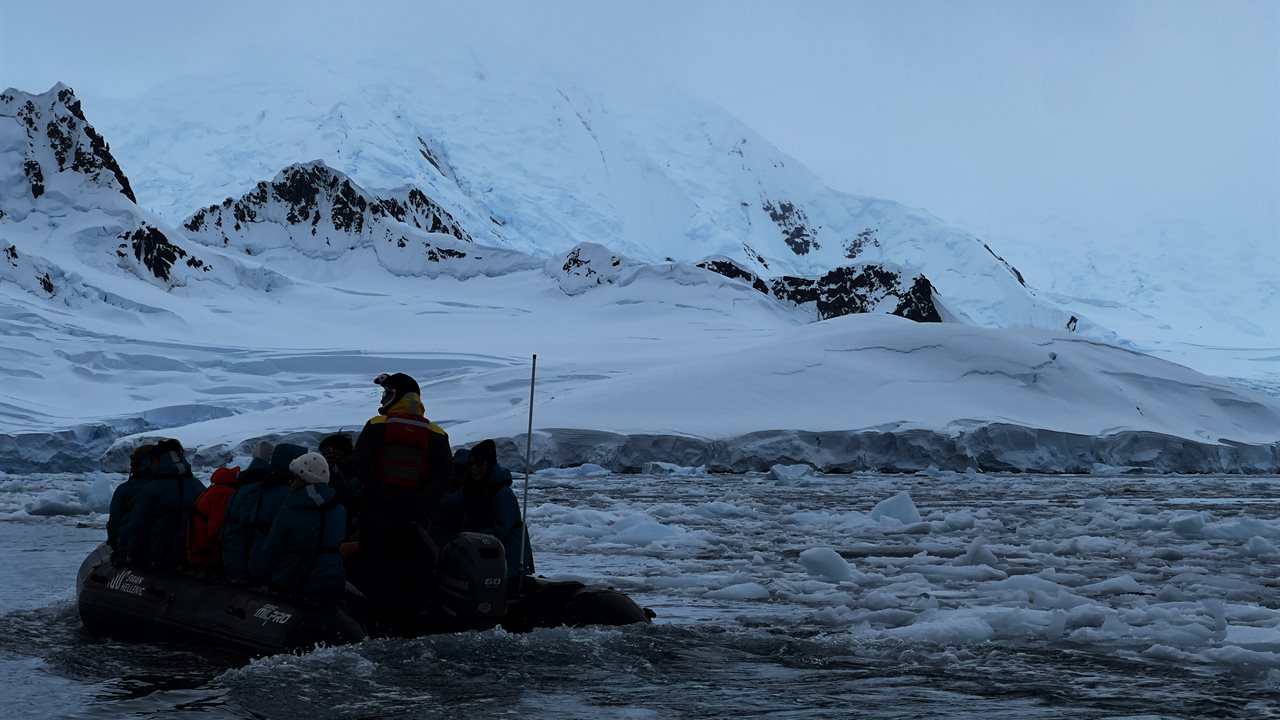
Photo: Srishti Sethi / Wikimedia Commons, CC BY-SA 4.0
Antarctica Cruise Zodiac Boarding for Elderly Passengers: What It's Really Like
Boarding follows a set sequence every time. Crew use a wrist-to-wrist or forearm grip rather than a handshake grip, which gives far more control if a boat shifts underfoot (Polar Latitudes). Passengers step down one stair at a time, take their seat immediately, and remain seated while the Zodiac is underway (Antarctica Zodiac Expeditions guide). It is repetitive, well-rehearsed, and rarely rushed.
Antarctica Cruise Walking Distance Per Day: Setting Realistic Expectations
Each landing typically offers multiple activity levels, from short beach walks to longer hikes (Swoop Antarctica). Shore landings are optional; travelers with limited mobility can remain aboard without missing the voyage entirely (Antarctica Guide). On active days, expect gentle walks with rest breaks, sometimes covering 3-5 km in total (Antarctica Cruise program).
Medical Clearance, Insurance, and Onboard Health Support
Every reputable operator requires a completed medical questionnaire before final booking, and most staff a ship's doctor for the voyage (ZoomDoc). Evacuation insurance is not a suggestion - it is a stated condition of boarding for most expedition lines (Aurora Expeditions). Onboard medical centers typically include a doctor and nurse, though treatment may carry a separate fee (Antarctica Cruise Preparation Guide). See our full methodology for how we evaluate operator medical support.
| Operator | Ship doctor | Evacuation insurance required | Medical facility | Notes |
|---|---|---|---|---|
| Poseidon Expeditions | Yes | Yes | Onboard medical center | Specifics vary by sailing |
| Aurora Expeditions | Yes | Yes | Doctor + nurse | Confirmed |
| Silversea | Yes | Yes | Full medical center | Specifics vary by ship |
| Viking | Yes | Yes | Onboard medical clinic | Specifics vary by sailing |
| Ponant | Yes | Yes | Medical staff onboard | Specifics vary by ship |
| Quark Expeditions | Yes | Yes | Medical team onboard | Specifics vary by sailing |
Verify specific medical facility details directly with each operator before booking. All data subject to change.
Antarctica Cruise Trip Insurance for Seniors: What's Non-Negotiable
Three components matter most: an evacuation limit of $200,000-$500,000 or higher (Squaremouth), pre-existing condition coverage - usually an add-on that must be purchased within roughly 14-21 days of your first trip deposit (TravelCare Insurance), and medical-reason trip cancellation cover. Operators generally require proof of evacuation coverage before boarding (Antarctica Guide). Standard travel insurance is not guaranteed to include Antarctic evacuation by default, so read the policy closely rather than assuming.
Fly the Drake vs. Sailing: Which Route Suits Older Travelers?
Fly-cruise itineraries skip the roughly 48-hour Drake Passage crossing entirely by flying directly from Punta Arenas to King George Island (Antarctica21), removing the single biggest seasickness risk for older travelers. Expect to pay $3,000-$5,000 more per person for the privilege (Polar Cruises), with fly-cruise fares starting around $12,600-$13,795 per person (Lindblad Expeditions).
Fly the Drake - choose if:
- Seasickness is a known concern
- Balance or vestibular issues make rough seas risky
- Time is limited (saves roughly 4 days total)
- Cardiovascular conditions mean prolonged rough conditions are inadvisable
Sail the Drake - choose if:
- Budget is a priority ($3,000-$5,000 less per person)
- The crossing itself is part of the expedition experience you want
- You've sailed in rough conditions before without problems
- Ship stabilizers and anti-nausea medication work well for you
Choosing the Best Antarctica Cruise Ship for Seniors
Comparing Silversea, Viking, Ponant, and Lindblad from an older traveler's perspective comes down to boarding ease, cabin comfort, and how the ship is actually run. Silversea's Antarctica ships are all-suite and all-inclusive with butler service, free Wi-Fi, multiple restaurants, a Zodiac fleet, and a fly-cruise option (Silversea). Viking's enclosed marina, The Hangar, simplifies boarding and disembarking for hesitant or less mobile passengers, aboard all-suite ships (Senior Tripper). Ponant runs smaller luxury sailings with comfortable cabins, an elevator, expert lectures, and optional kayaking or camping (Vincent Vacations). Lindblad leans expedition-and-education, with a strong focus on wildlife and Zodiac excursions (Undiscovered Sunsets). We do not make final claims about medical staffing depth or stabilization technology across all four lines without direct operator confirmation.
| Operator | Ship size | Fly option | All-inclusive | Senior standout feature | Price tier |
|---|---|---|---|---|---|
| Poseidon Expeditions | Small (114 pax) | No | Partial | Smallest overflow, most time ashore | Mid-premium |
| Silversea | Medium (200 pax) | Yes | Yes | All-suite + butler service | Ultra-luxury |
| Viking | Medium (378 pax) | Yes | Yes (mostly) | The Hangar marina - easiest boarding | Luxury |
| Ponant | Small (90-245 pax) | Select routes | Yes (most) | Elevator, intimate ships | Luxury |
| Lindblad | Small (126-148 pax) | Select routes | Partial | Science & education focus | Premium |
| Aurora Expeditions | Small (130-154 pax) | No | Partial | No solo supplement on select cabins | Mid-premium |
| Quark Expeditions | Small-Medium | Yes (Fly the Drake) | Partial | Fly the Drake option | Mid-premium |
Pricing tiers and inclusions verified as of August 2026. Confirm current details directly with each operator.
Poseidon Expeditions: Why 114 Passengers Matters for Older Travelers
M/V Sea Spirit - the IAATO overflow math that directly benefits seniors
IAATO allows a maximum of 100 people ashore at one site at once. Sea Spirit carries 114 passengers - an overflow of just 14. While up to 100 guests land, the remaining 14 are already out on Zodiac or kayak nearby. No one sits aboard waiting. Compare this to ships with far larger overflows, where several rotations can mean less than 90 minutes ashore per guest.
Up to 3 landings per day, each approximately 2.5 hours. For older travelers who want to make every moment count, this structural advantage is not about luxury - it is about time. A 14-passenger overflow is one of the smallest in the industry.
Naturalists, biologists, geologists, and historians with hundreds of polar voyages behind them, at work on every landing. For travelers who want to understand what they are seeing, not just photograph it, this depth of expertise is the difference between a scenic trip and an expedition.
Small Ship Antarctica Cruise Comfort vs. Larger Vessels
The honest trade-off: small ships land more often and reach more remote sites, while larger vessels tend to offer stronger stabilization and more onboard amenities. One hard regulatory fact worth knowing - ships carrying more than 500 passengers are not permitted to make shore landings in Antarctica at all (Barcos para Cruceros a la Antartida). Whether small ships pitch and roll noticeably more than larger ones depends heavily on hull design and sea state, and we are not asserting a blanket difference here.
Antarctica Cruise Solo Seniors and Single Supplement Considerations
Single supplements vary widely by operator, from roughly 50% at the lower end up to 140-200% at the top (Chimu Adventures). Aurora Expeditions sets aside 10 dedicated solo cabins per sailing for the 2026/2027 season with no supplement, charging 50% only once those cabins are full (Aurora Expeditions). Several operators also offer same-gender cabin sharing to avoid the supplement altogether (Swoop Antarctica). Ponant is also reported to offer solo cabins without a supplement on select Antarctica sailings.
Best Time for an Antarctica Cruise: Timing Comfort and Wildlife Around Senior Needs
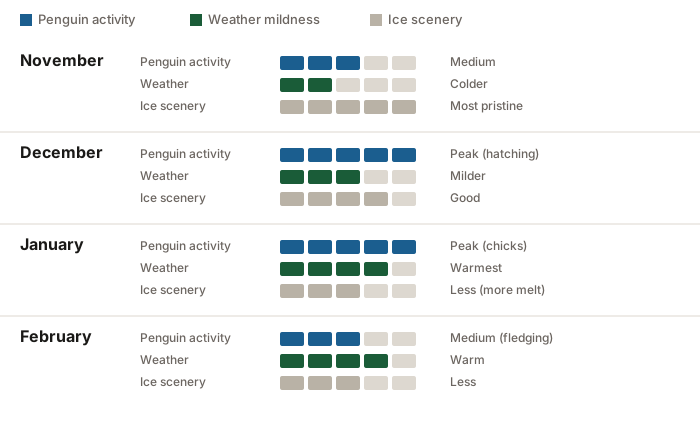
December and January work best for most older travelers, with the longest daylight hours, milder temperatures, and peak penguin activity (Antarctica Cruises). November brings more pristine, less-melted ice scenery, but colder conditions and less accessible landing sites (Oceanwide Expeditions). Penguin hatching and chick season peaks from mid-December through January.
What to Expect Day-to-Day: Zodiacs, Landings, and Life Onboard
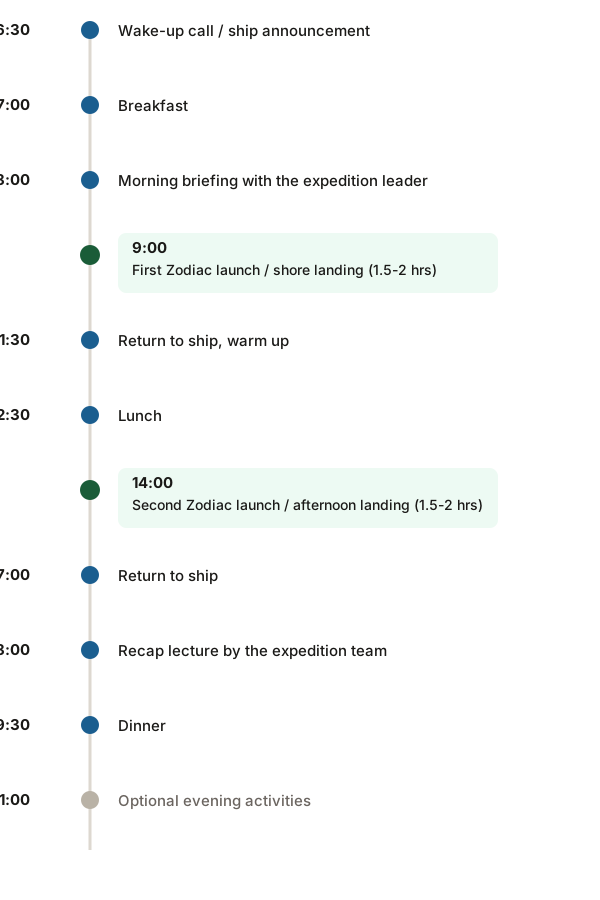
Mornings begin with cold, clean air on deck and an announcement crackling over the ship's speakers. Most days bring a morning briefing, one or two Zodiac outings or shore landings, and an evening recap or lecture (Antarcticacruises.com). For travelers who prefer to stay aboard, Zodiac cruising past icebergs and wildlife, plus deck-side wildlife watching, remain available without ever setting foot on shore (Antarcticaguide.com).
Antarctica Cruise vs. Arctic Cruise for Seniors: Key Differences
Both are serious remote-region expeditions with similar medical and insurance requirements. Antarctica is reached exclusively by sea or fly-cruise from South America, while Arctic itineraries vary more by region and season. We are not asserting that the Arctic is generally less physically demanding than Antarctica; the two require similar preparation.
Antarctica Cruise Cost for Seniors: What the Investment Actually Covers
2026 pricing runs from roughly $7,000 to over $30,000 per person, with some suites exceeding $50,000 (Antarctica Cruises 2026 listings). A standard 10-12 day Peninsula route runs about $10,000-$12,000 per person (Aurora Expeditions). Several operators marketing to older travelers highlight onboard medical staffing as part of the value proposition (TourRadar). The spread mainly reflects route, ship class, and cabin category.
Usually included:
- Accommodation and all meals onboard
- Zodiac excursions and shore landings
- Expedition parka (yours to keep on most lines)
- Rubber boots (loan)
- Lectures and educational programming
- Port fees and fuel surcharges
Usually NOT included:
- International flights to departure port
- Pre/post-cruise hotel
- Travel insurance (mandatory but separate)
- Optional activities (kayaking, camping, helicopter)
- Gratuities (varies by operator)
- Onboard medical treatment fees
- Alcoholic beverages (varies by operator)
Packing and Preparing: A Senior Traveler's Checklist
Preparation for an Antarctica cruise for seniors covers three areas: medication, layered clothing, and mobility support. Fly-cruise travelers face a firm baggage limit of one 23 kg checked bag plus 8 kg of hand luggage (Travel Babbo), so pack deliberately.
- Medications: Full supply plus 3-5 days extra. Specific prescriptions are not guaranteed onboard. Carry in hand luggage, not checked bags.
- Base layer: Merino wool or synthetic thermal top and bottoms. Cotton is not suitable - it retains moisture and loses warmth when wet.
- Mid layer: Fleece jacket or down vest for insulation.
- Outer layer: Waterproof, windproof jacket and trousers. Most operators provide a parka; confirm before purchasing one.
- Footwear: Rubber boots loaned by operator for Zodiac landings. Bring waterproof walking shoes or boots for ship use.
- Mobility aids: If you use a walking stick or trekking poles, bring them. Deck surfaces can be wet. Confirm pole use policy with your operator.
- Seasickness medication: Bring patches, tablets, or bands regardless of route - conditions can change.
- Fly-cruise baggage limit: One checked bag up to 23 kg plus hand luggage up to 8 kg. Pack accordingly.
Is an Antarctica Cruise Worth It for Seniors? Final Verdict
Yes, an antarctica cruise for seniors is worth it for the great majority of travelers who complete an honest health and mobility self-assessment first. The barriers people assume exist - a hard age cutoff, mandatory shore landings, unavoidable rough seas - are mostly optional or manageable with the right operator and the Fly the Drake choice. What remains is one of the few landscapes on Earth still reached almost entirely on its own terms. Explore the full operator comparison above to shortlist a ship that matches your comfort and mobility needs.
Frequently Asked Questions
What is the best Antarctica cruise for seniors?
The best fit depends on mobility and budget, but small expedition ships with low IAATO overflow, an onboard doctor, and a Fly the Drake option tend to suit older travelers best. Operators such as Poseidon Expeditions, Aurora Expeditions, and Viking are frequently highlighted for senior-friendly boarding and maximum time ashore.
What are the physical requirements for an Antarctica cruise for seniors?
Travelers should be able to climb two flights of stairs, stand unsupported on a moving surface for about 30 seconds, and tolerate outdoor cold for 60-90 minutes. Zodiac boarding and uneven, wet terrain on shore landings are the main physical demands, not age itself.
What is the average cost of an Antarctica cruise in 2026?
Most 2026 Antarctica cruises range from about $7,000 to over $30,000 per person, with some luxury suites exceeding $50,000. A typical 10-12 day Peninsula voyage runs roughly $10,000-$12,000 per person, before flights, insurance, and gratuities.
What medical facilities are available on Antarctica cruise ships?
Expedition ships typically carry a ship doctor and an onboard medical center or clinic, though capabilities vary by operator and vessel size. Mandatory evacuation insurance is required because Antarctica has no hospitals; serious cases require costly emergency evacuation.
Is an Antarctica cruise worth the money for older travelers?
For most travelers with adequate mobility and health clearance, yes. The continent is largely inaccessible any other way, shore landings are optional rather than mandatory, and small-ship operators are structured specifically around comfort, safety, and maximum time in the landscape.
Which month is the best for an Antarctica cruise?
December and January generally suit older travelers best, offering the longest daylight, milder temperatures, and peak penguin chick activity. November offers more pristine ice scenery but colder conditions; February brings warmer weather with less dramatic ice.
What are the main risks of a cruise to Antarctica for seniors?
The Drake Passage crossing, cold exposure during landings, and the remoteness of emergency medical care are the primary risks. These are manageable with the Fly the Drake option, proper layering, mandatory evacuation insurance, and honest self-assessment of mobility before booking.